
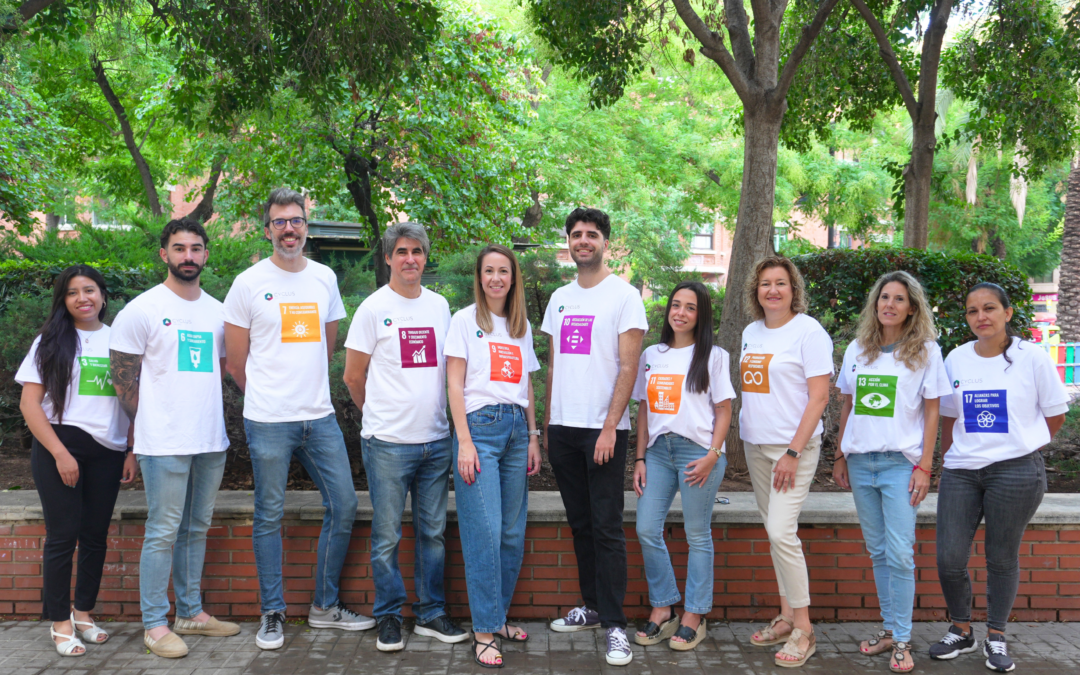
As part of its commitment to the 2030 Agenda, the group promotes infrastructure projects that meet standards such as LEED and BREEAM, waste recovery, the use of renewable energy, and partnerships with social and academic organizations.
The CYCLUS Group, a business group specialized in construction with more than 65 years of experience and an international presence, is commemorating the 11th anniversary of the Sustainable Development Goals (SDGs) by focusing on their practical application and the actions it is taking to advance the integration of ESG criteria into its operations and projects.
Health and Safety plays a fundamental role in the execution of the company’s projects, with measures designed to strengthen prevention and move toward increasingly safe work environments. Protecting people is one of its main areas of focus, in line with objectives related to areas such as health, well-being, and decent work.
In terms of water, energy, responsible consumption, and climate action, the Group is working on the efficient management of resources, waste recovery, and the gradual decarbonization of its operations. In 2025, 78.62% of the waste generated by the CYCLUS Group was recycled. In addition, the Group prioritizes contracting electricity with a Guarantee of Origin certificate for offices and construction sites where grid access is available, thereby promoting the use of electricity from renewable sources.
Alongside these initiatives, innovation and the development of sustainable infrastructure are another key area of focus. The CYCLUS Group has implemented BIM methodology at an advanced level and is progressively incorporating industrialization solutions—such as prefabrication and pre-assembly—which are already being applied in some of its data center projects to optimize processes and reduce on-site work.
This approach also extends to the projects carried out by the Group’s companies. Some of them have earned international sustainability certifications at the highest levels, such as LEED and BREEAM, which recognize their performance in areas such as efficiency, materials, resource management, and environmental impact.
Similarly, the social dimension takes the form of agreements and programs aimed at promoting inclusion and adapted employment, as well as partnerships with organizations such as the Adecco Foundation, Ronald McDonald House, and Asindown Valencia. In the field of education and knowledge transfer, the CYCLUS Group also maintains partnerships with academic institutions, including a university chair at the Polytechnic University of Valencia, which strengthen the connection between business, education, and the construction sector.
CYCLUS’s commitment is also grounded in international frameworks to which the group’s operating companies adhere. For example, its design and construction division, ITERCON, has been a signatory to the United Nations Global Compact since 2010, and in 2026, SERVITRIA also joined this initiative, further reinforcing the Group’s alignment with its ten principles regarding human rights, labor standards, the environment, and the fight against corruption.